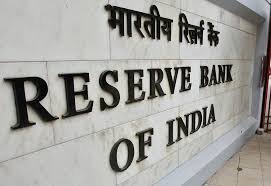
New Delhi – In a move that signals a significant thaw in regulatory relations between India and Europe, the Reserve Bank of India (RBI) has officially signed a Memorandum of Understanding (MoU) with the European Securities and Markets Authority (ESMA). The agreement, finalized on January 27, 2026, establishes a formal framework for the recognition of Indian Central Counterparties (CCPs), most notably the Clearing Corporation of India Ltd (CCIL).
The signing took place during the high-profile visit of the President of the European Council and the President of the European Commission to India, coinciding with the conclusion of negotiations for the India-EU Free Trade Agreement (FTA).

This new agreement effectively ends a two-year impasse that began in late 2022. At that time, ESMA had withdrawn recognition for six Indian clearing houses after the RBI resisted demands for direct supervisory and audit rights by European regulators over Indian infrastructure. The RBI had maintained that such demands were an extraterritorial overreach that infringed upon India’s sovereign regulatory domain.
Under the new MoU, a middle ground has been reached. ESMA will now place “reliance” on the RBI’s own regulatory and supervisory framework. This means the European regulator will trust the RBI’s oversight of Indian CCPs rather than conducting its own direct inspections, provided that the financial stability of the European Union remains safeguarded.

The MoU replaces a previous pact from 2017 and is designed to remain operative for an unlimited period. Both authorities will consult and exchange information regarding the covered CCPs to ensure they meet recognition conditions. ESMA will rely on the RBI’s supervision, acknowledging the Indian central bank’s accountability for the resilience of its regulated entities.
The agreement allows the CCIL to re-apply for formal recognition under the European Market Infrastructure Regulation (EMIR) Article 25.
The lack of recognition had previously created a “penalty” for European banks operating in India, such as Deutsche Bank, BNP Paribas, and Societe Generale. Without ESMA recognition, these banks faced significantly higher capital charges on their exposures to Indian clearing houses, making it more expensive to trade in Indian government bonds and derivatives.
By restoring this recognition, the cost of doing business is expected to drop, likely leading to increased participation by European institutional investors in the Indian debt market.
While the current MoU specifically covers CCPs regulated by the RBI, ESMA is reportedly in ongoing discussions with the Securities and Exchange Board of India (SEBI) and the International Financial Services Centres Authority (IFSCA) to sign similar cooperation agreements for other clearing entities.
The resolution of this dispute is seen as a vital component of the broader India-EU strategic partnership. It reinforces the image of India as a maturing financial market that is increasingly aligned with global standards while maintaining its regulatory independence.
Read Also : New Popular Series on Netflix: What’s Topping the Global Charts in January 2026