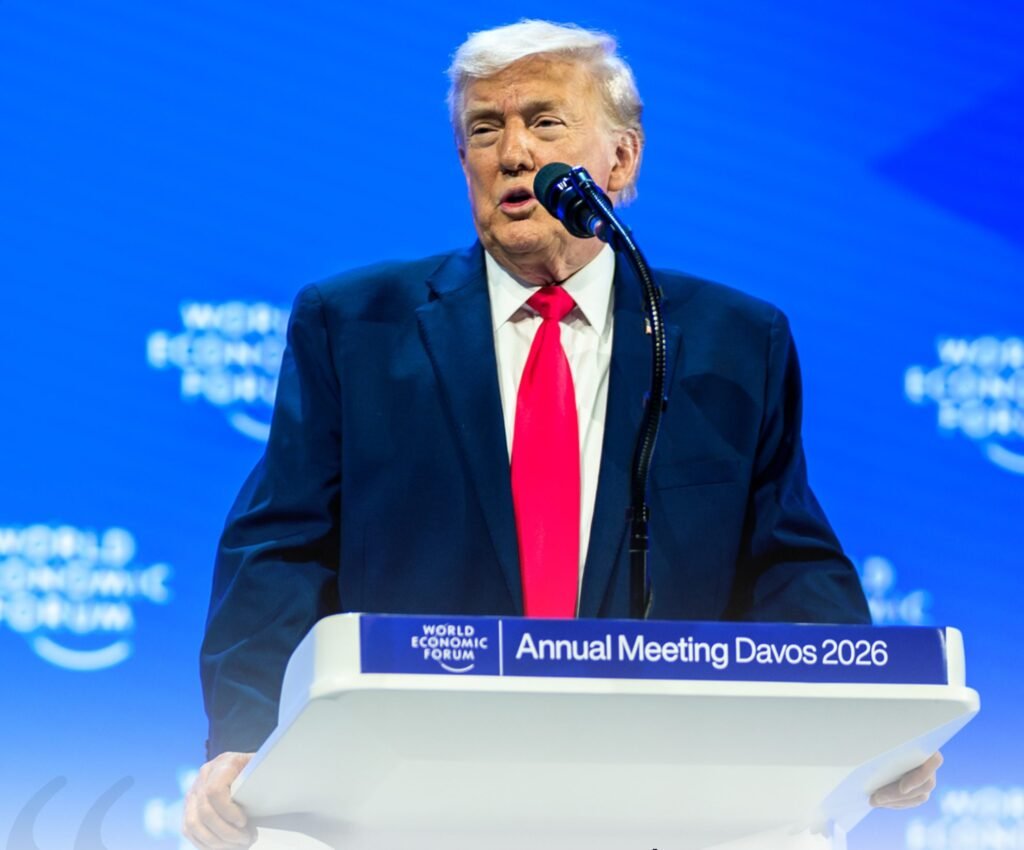
DAVOS – In a significant shift that has sent ripples through global markets and diplomatic circles, US President Donald Trump announced on Wednesday that the United States will not use military force to acquire Greenland. Accompanying this pledge was the immediate cancellation of a controversial 10% tariff previously set to target several key European allies starting February 1. The announcement came during the World Economic Forum in Davos, following high-stakes discussions with NATO Secretary General Mark Rutte. The two leaders have reportedly established a “framework of a future deal” regarding Arctic security, providing a diplomatic off-ramp for a situation that had threatened to fracture the Western alliance. Addressing a packed hall of global business and political leaders, the President clarified his administration’s stance on the autonomous Danish territory. While reiterating his firm belief that US “right, title, and ownership” of Greenland is essential for national security, he struck a more conciliatory tone than in recent weeks.
“I don’t want to use force. I won’t use force,” the President stated. “All the US is asking for is a place called Greenland. We can do this the easy way, and we will be very appreciative.” The rhetoric marks a de-escalation from earlier in the month, where the administration had refused to rule out “the hard way” to secure the island, citing its strategic importance in countering Russian and Chinese influence in the Arctic.
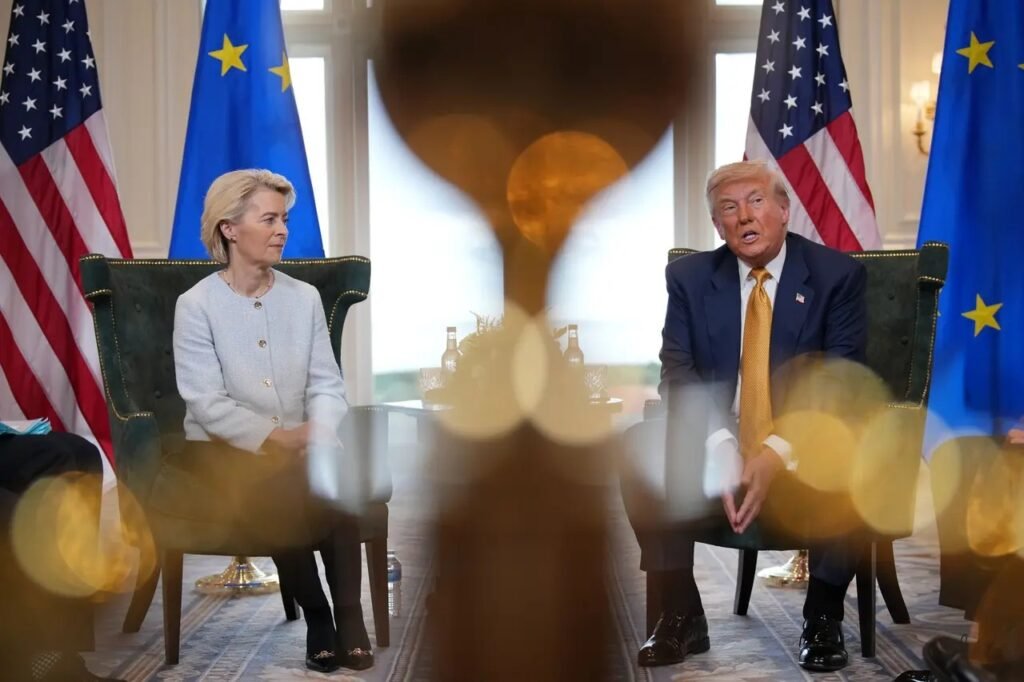
The most immediate economic impact of the announcement is the withdrawal of the tariff threat against eight European nations: Denmark, the United Kingdom, Norway, Sweden, France, Germany, the Netherlands, and Finland. The proposed levies, which were scheduled to climb to 25% by June, had drawn sharp condemnation from European leaders. British Prime Minister Keir Starmer and European Commission President Ursula von der Leyen had both signaled readiness to retaliate with significant trade barriers of their own. By scrapping the tariffs, the White House has effectively paused a looming trade war. “Based upon our new understanding with NATO, I will not be imposing the tariffs,” the President confirmed via social media shortly after his speech.

While the immediate threat of military action or trade sanctions has subsided, the future of Greenland remains a complex geopolitical puzzle. The new framework mentioned by NATO’s Mark Rutte focuses on “Arctic security” rather than a direct sale of the territory—a concept the Danish government continues to reject. Danish Foreign Minister Lars Løkke Rasmussen welcomed the ruling out of force but emphasized that Greenland’s sovereignty is not a bargaining chip. “Now, let’s sit down and find out how we can address American security concerns while respecting the red lines of the Kingdom of Denmark,” Rasmussen said.
As part of the potential compromise, discussions are expected to shift toward expanding the US military footprint and missile defense capabilities on the island, rather than a total transfer of ownership. For now, the global community breathes a sigh of relief as the “Greenland Crisis” moves from the battlefield of threats to the boardroom of diplomacy.
Also Read: Republic Day Parade 2026 special guests